
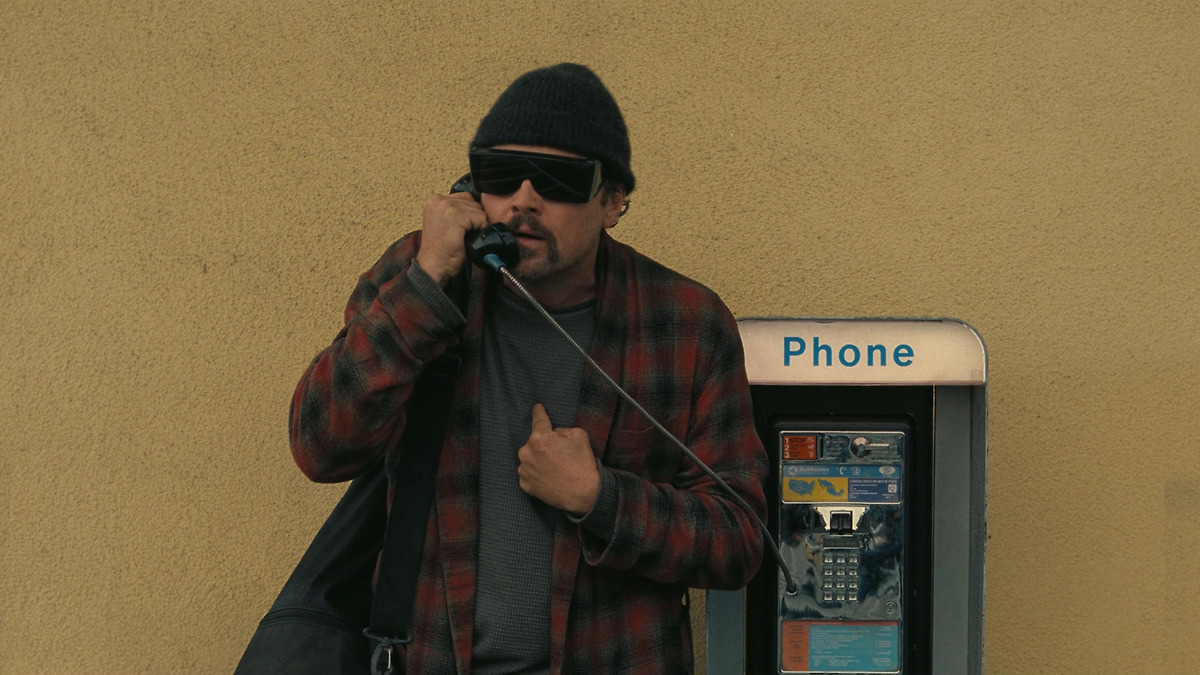
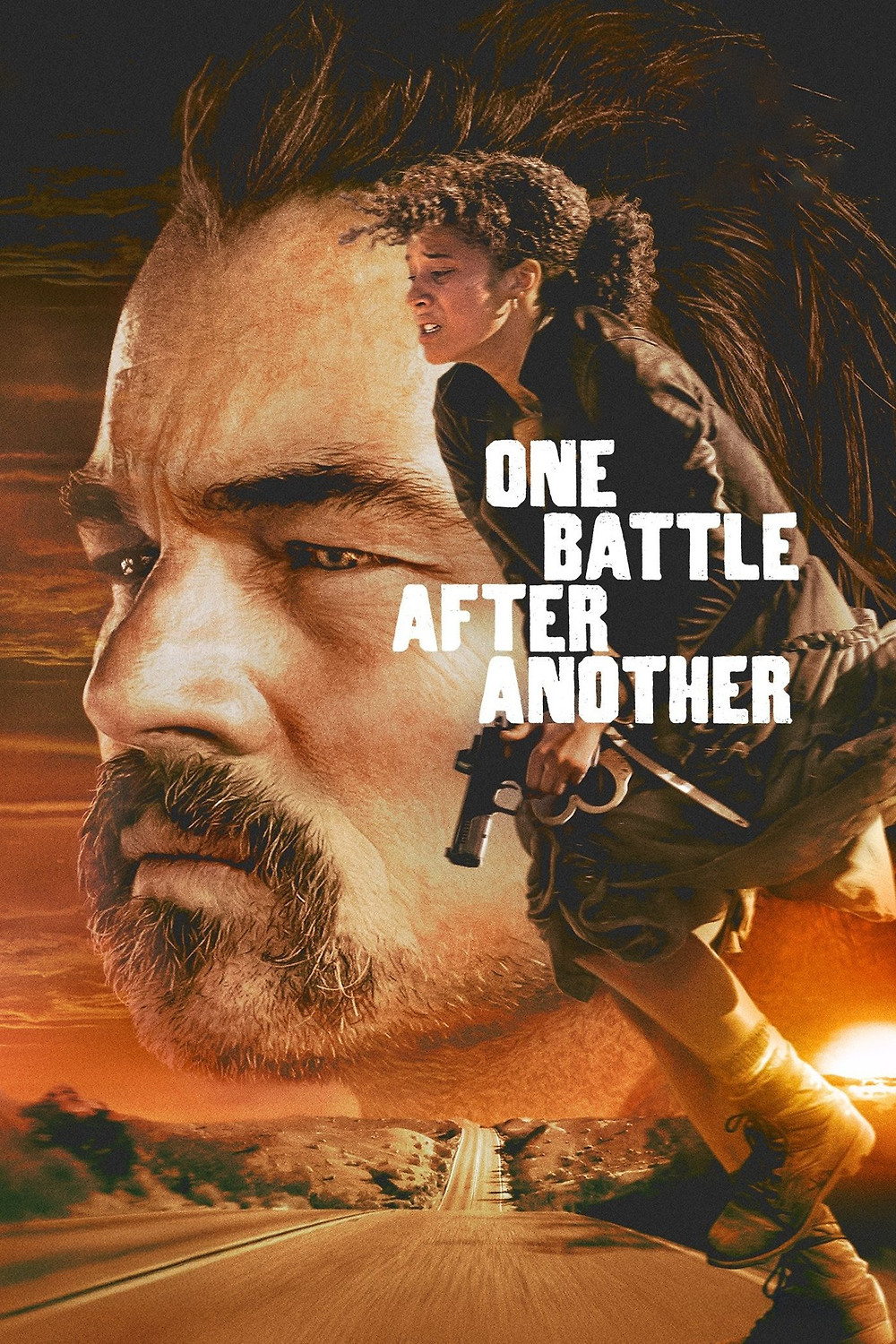
On a first viewing of One Battle After Another, I misjudged it.
Rewatched — 17 Dec 2025
On a first viewing of One Battle After Another, I misjudged it. What I now realize had bothered me while reviewing it the first time wasn't the film, but how it’s often being watched and reviewed.
A lot of the praise seems to focus on what the film appears to "stand for," rather than how it actually works. The craft is rightly admired, but sometimes that admiration feels like a cover because the film seems to be liked for reasons that aren’t really about the film itself. Political readings aren’t wrong, but they often stop where agreement begins. The film isn’t strong because it addresses certain politics, because it isn’t primarily about them. It's the setting, not the message. One Battle After Another's power comes from the mythic sweep of the story. It doesn't represent sides, it depicts them.
The opening plays like myth. We’re watching gods at war - figures of extreme opposites in a (sensual) roleplaying game. They demand loyalty from their followers while both of them wreck lives and treat conflict like a game. The logic here isn’t just contemporary or realistic; it’s ancient and it speaks of something true. These aren’t characters you’re meant to agree with so much as forces you’re meant to witness.
Then the film shifts.
When the opening ends and we see Pervidia’s daughter, now grown - calm, disciplined, centered in a way neither of her parents ever were - I got teary-eyed. The music, the passage of time, the way years of chaos collapse into that one image hit me hard. I saw the hero. I saw Luke Skywalker.
That scene is the hinge of the movie. Everything after it is still large and consequential, but it’s grounded. We’re no longer hovering above the conflict—we’re inside it. Seen this way, One Battle After Another feels like modern mythology in two movements: gods clashing, then people getting involved in that conflict and dealing with that. Like Phantom Thread as a modern gothic tale, One Battle After Another works as a Greek myth. It works on an old emotional logic—cycles repeating, damage echoing forward, children left to carry what their parents didn't even try to resolve.
The film doesn’t ask you to pick a side. It asks you to experience and learn the narrative, not take a team. I will be rewatching this film a number of times and I hope more people will.
Watched — 03 Oct 2025
A lot of incredible parts to this oddly paced whole. Unfortunately I'm not as impressed as I was hyped. Needs a rewatch and will definitely get it somewhere in the near future.